Deep-Dive VW Scirocco History: The EA398 Project
In the early 1970s, Volkswagen needed a new strategy. They wanted to abandon rear-engine, air-cooled vehicle architectures. Therefore, they relied heavily on Project EA337. This eventually became the famous Golf Mk1. VW needed to safeguard their massive front-wheel-drive platform investment. Consequently, they spun off Project EA398. This was the internal code name for the Scirocco. This move sparked exciting VW Scirocco history.
Initially, the VW board hesitated on funding a niche coupe. They had very tight cash reserves. However, Karmann assumed the entire financial risk. They funded the development and tooling themselves. They did this to preserve manufacturing output. This protected jobs at their Osnabrück assembly plant.
The Scirocco served as a high-visibility reliability testbed. Therefore, it was deliberately rushed to the automotive market. It debuted at the Geneva Motor Show in March 1974. This was roughly six months ahead of the Golf. This allowed VW engineers to identify real-world platform issues. They corrected front-wheel-drive problems before the hatchback launched.
Mechanical And Chassis Evolution (1974–1992)
Both generations shared Volkswagen’s excellent A1 platform. However, the mechanical architecture shifted significantly over time. It moved from basic commuter underpinnings to specialized performance engineering. This is a crucial part of VW Scirocco history.
A1 Platform Suspension Layout
The front suspension utilized standard MacPherson struts and lower wishbones. Conversely, the rear suspension used a semi-independent twist-beam axle. It also featured strong trailing arms for stability.
The Early SOHC Architecture (Mk1)
Early cars relied heavily on the EA827 engine family. This was a single-overhead-cam, 2-valve-per-cylinder design. Fuel delivery methods transitioned significantly during these years. Early models used dual-barrel Solex carburetors. Eventually, they upgraded to Bosch K-Jetronic mechanical fuel injection. This Continuous Injection System arrived by 1977.
Standard Mk1 models lacked proper structural chassis rigidity. The first Scirocco GTI arrived in 1976. Consequently, this forced major engineering upgrades. VW added factory-fitted front and rear anti-roll bars. They also included vented front brake discs and lower ride heights.
The DOHC 16V Revolution (Mk2)
The Scirocco 16V debuted in mid-1986. It fundamentally re-engineered the classic A1 chassis. This managed a massive leap in horsepower.
| Component | Base 8V Models (Mk2) | High-Performance 16V Models |
| Engine Layout | EA827 SOHC 8-Valve | KR / PL DOHC 16-Valve |
| Fuel System | Mechanical Bosch K-Jetronic | Bosch KE-Jetronic Hybrid |
| Front Brakes | 9.4-inch Solid Discs | 10.1-inch Vented Discs |
| Rear Brakes | 7.1-inch Hydraulic Drums | 8.9-inch Solid Discs |
| Chassis Brace | Sway bars only | Lower K-bar subframe brace |
| Transaxle | Standard 5-speed manual | Close-ratio 020 2Y gearbox |
Aerodynamic And Styling Physics
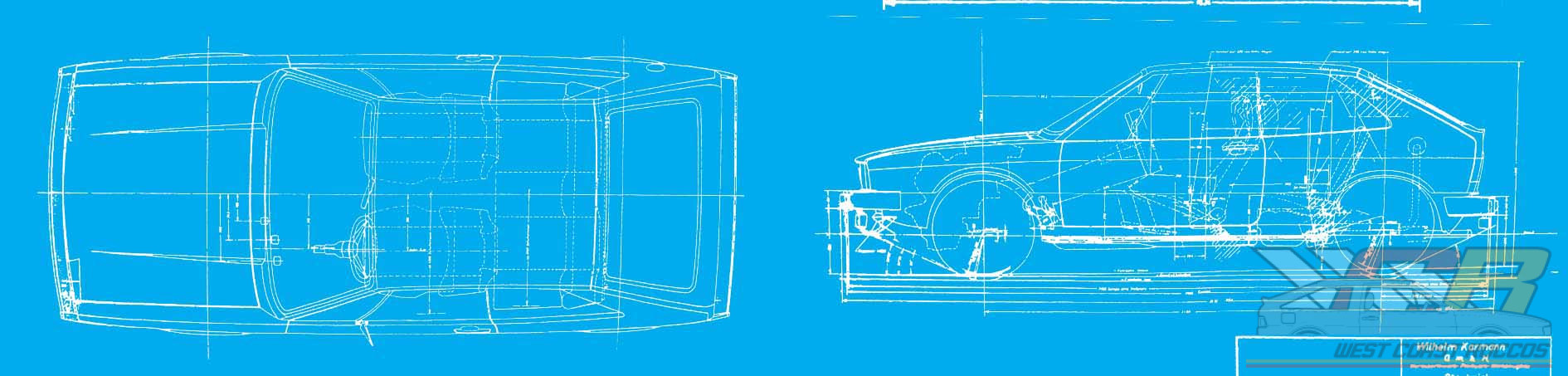
Giorgetto Giugiaro designed the original Mk1 exterior. Later, Herbert Schäfer designed the in-house Mk2 shape. Wind tunnel optimization at Wolfsburg heavily drove this design evolution.
Drag Coefficient Progression
The Mk1 Giugiaro design had a 0.42 drag coefficient. It was highly geometric and suffered high front-end lift. The Mk2 Schäfer design achieved a 0.38 drag coefficient. Therefore, it was ten percent more aerodynamic. This resulted from a significantly elongated roofline.
The Mk2 Mid-Glass Spoiler
Schäfer’s engineering team extended the body by 16 centimeters. They also pushed out the side flanks. This maximized the interior cabin space significantly. However, this longer roofline caused massive aerodynamic lift. This lift occurred over the rear axle at high speeds.
Engineers needed to combat this lift without ruining visibility. Therefore, they added an integrated matte-black polyurethane spoiler. They placed it directly across the middle glass hatch. This clever device broke up turbulent air effectively. Consequently, it reduced rear-end aerodynamic lift by thirty percent.
Global Production And Market Disparity
Production of the Scirocco was uniquely divided globally. It featured European specifications and heavily restricted North American variants. This division heavily influenced VW Scirocco history.
The Bumper And Light Dilemma
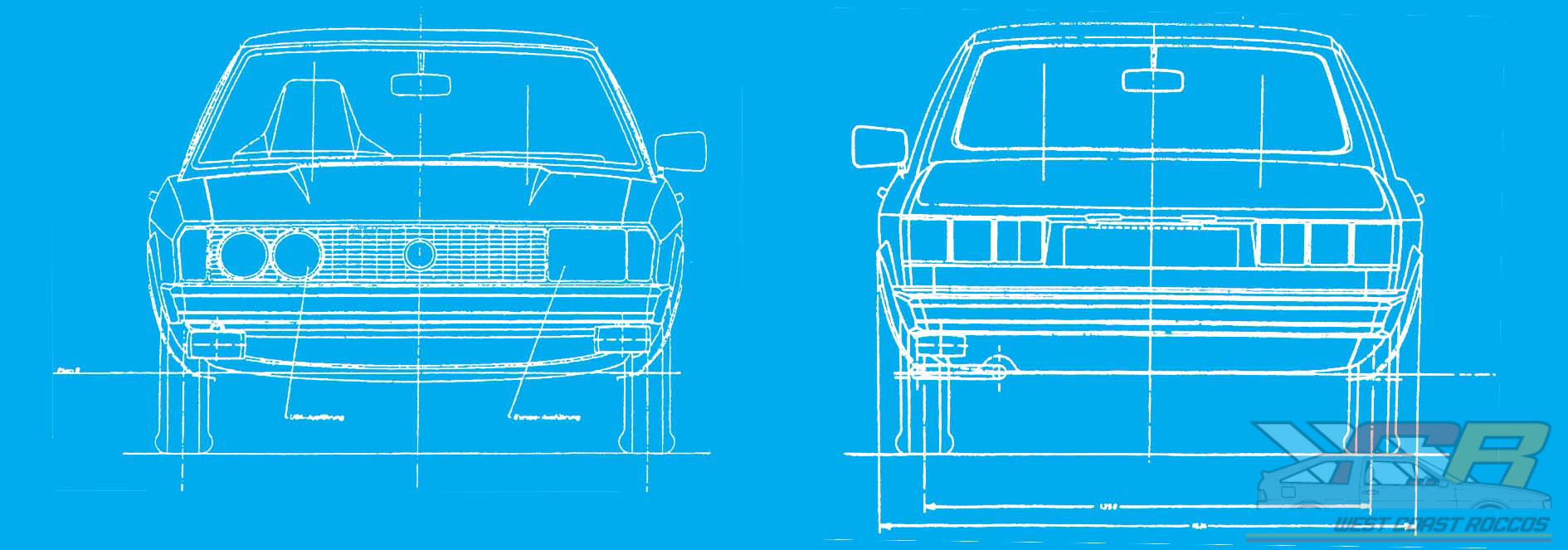
US federal safety mandates forced massive exterior changes. VW had to replace the flush European lighting configurations. Instead, they used quad round sealed-beam headlights for the Mk1. Later, they used quad rectangular headlights for the Mk2.
Furthermore, strict federal 5-mph bumper impact laws existed. These laws required heavy, protruding energy-absorbing aluminum bumpers. Sadly, these bumpers disrupted the vehicle’s beautiful clean lines. They also added massive amounts of unwanted forward weight.
Strict Federal Emissions Constraints
European drivers absolutely loved the 1.8L 16V KR engine. It pumped out 139 metric horsepower very easily. Furthermore, it did not require a restrictive catalytic converter. Meanwhile, North American models received the heavily detuned PL engine.
This US specification engine was heavily constrained. It suffered from a highly restrictive exhaust system. It also required a catalytic converter and different camshaft profiles. Consequently, the power output dropped down to 123 horsepower.
North American sales dropped sharply after 1986. This led to its complete withdrawal from the US market in 1988. However, the Mk2 continued selling incredibly well throughout Europe. Special high-trim runs kept the assembly lines incredibly busy. These included the Scala, White Cat, and GT II. As a result, VW manufactured 291,497 total Mk2 units. They built them alongside the intended successor, the Corrado. Final retirement eventually arrived in late 1992.
Highly Desirable Special Editions
Volkswagen heavily relied on limited production models. This occurred throughout the entire Mk1 and Mk2 lifetime. These unique special editions featured highly specific paint codes. They also included unique upholstery and premium accessory combinations.
Mk1 Scirocco Special Editions (1974–1981)
The Mk1 utilized Giugiaro’s original minimalist geometric design language. Therefore, special editions focused strictly on unique interior fabrics. They also featured distinctive pinstripes and premium dealer options.
-
Champagne Edition (1977–1978): This model drove massive traffic into US showrooms. It featured Alpine White exterior paint. It also boasted a striking bright red leatherette interior.
-
Champagne Edition II (1978): This followed the original but flipped the aesthetic. It came in a unique metallic gold hue. It also featured custom geometric plaid cloth upholstery.
-
Sidewinder Series (1979–1980): These were highly aggressive North American appearance packages. They featured matte-black lower front spoilers. They also showcased distinctive sport-striped decals and blacked-out trim.
-
Scirocco S (1980–1981): This was the ultimate factory trim for the US market. It featured bolstered Recaro-style sport seats. It also included five-speed transaxles and deep front chin spoilers.
-
Storm (1979–1981): This is arguably the most desirable UK Mk1 model. Only 618 units were ever successfully constructed. It featured full leather-trimmed seats and standard alloy wheels.
Mk2 Scirocco Special Editions (1981–1992)
Production eventually moved completely in-house to Germany. Consequently, VW aggressively marketed the aerodynamic Typ 53B body kit. They did this via distinct European and North American limited trims.
-
Wolfsburg Edition (1983–1985): This trim lacked a lower aerodynamic body kit. It featured premium leather cabins and unique Wolfsburg crest badges.
-
California Edition (1983): This was a regional appearance package for America. It featured specific paint codes and multi-stripe side graphics.
-
Mk2 Storm (1984): This premium luxury model arrived in the UK. It featured full leather upholstery and a multi-function trip computer.
-
White Cat (1985): This embraced the monochromatic white tuning trend. It featured Alpine White paint and white-painted alloy wheels.
-
Tropic (1986): This trim offered highly distinct metallic hues. It included matching multi-colored geometric pattern upholstery.
-
Scala (1987–1991): The entire exterior body kit was perfectly color-coded. Even the mirror caps matched the car’s primary paint.
-
Slegato (1988): This was an exclusive Canadian production run. It featured heavily bolstered sport seats and manual sunroofs.
-
GT II (1989–1992): This was the final volume-production special edition. It featured a digital cluster computer as standard equipment.
Cross Compatibility Between Scirocco Platforms
Cross-generation engine swaps between the Mk1 and Mk2 are highly feasible. Both cars share Volkswagen’s amazing foundational A1 platform. They share identical wheelbase measurements and engine mount locations. However, executing a clean swap requires careful navigation. You must understand structural changes in wiring and chassis geometry. This is vital to modern VW Scirocco history.
Chassis And Mechanical Swap Compatibility
Both generations utilize the same EA827 engine block family. Therefore, bolting an engine into another chassis is relatively straightforward. However, many important peripheral components vary significantly. Engine mounts are usually direct bolt-in replacements. Additionally, both generations utilize the exact same mechanical shifter linkage system.
The Engine Hood Clearance Dilemma
Swapping a tall 1.8L 16V engine creates strict clearance issues. Moving a Mk2 engine into a Mk1 is tricky. The 16V intake manifold sits significantly higher than SOHC manifolds. You need to shut a stock Mk1 hood cleanly. Therefore, you must use lower-profile aftermarket engine mounts. Alternatively, you can notch the structural hood bracing. Sourcing a rare European lower intake manifold also works perfectly.
Sway Bar And Control Arm Differences
The lower front control arms are fully interchangeable. However, transferring subframe components requires paying close attention. The Mk2 16V utilizes a unique lower K-bar subframe brace. This specific brace totally prevents chassis flex under heavy torque. You can easily retrofit this K-bar to a Mk1 chassis. However, it requires welding custom threaded inserts. Using heavy-duty rivet nuts inside the frame horns works too.
Fuel Routing And System Pressures
Upgrading an early fuel-injected Mk1 requires a total system overhaul. The Mk2 setup demands totally different operating fuel pressures. Therefore, you must update the entire fuel delivery system. Early carbureted models required 3 to 5 PSI. Meanwhile, the K-Jetronic systems required 75 to 80 PSI. Finally, KE-Jetronic systems demanded 80 to 90 PSI.
Tank And Fuel Line Routing Protocols
You cannot directly swap a Mk2 fuel tank into a Mk1. In 1984, Volkswagen enlarged the fuel tank size entirely. They increased it from 40 liters to 55 liters. This change easily accommodated a space-saver spare tire. Consequently, they altered the rear floor pan configuration completely. A 55-liter Mk2 tank will not physically clear the rear axle. It hits the floor structure of a Mk1 chassis.
The Fuel Lift Pump Solution
Early Mk1 fuel systems relied on a single external pump. This pump was gravity-fed directly from the tank bottom. Conversely, Mk2 cars utilize a complex dual-pump setup. They have a low-pressure in-tank lift pump. This feeds an external high-pressure main fuel pump. You might put a Mk2 engine into a Mk1 chassis. If so, you must run an aftermarket inline pre-pump. Otherwise, you must source an external fuel accumulator reservoir. This fully prevents fuel starvation during hard cornering.
Wiring Harness And Fuse Box Architecture
The electrical architecture represents the absolute largest swap hurdle. Bridging the generation gap requires serious wiring knowledge. Volkswagen used two entirely separate fuse box standards during this era. Early Mk1 models used ceramic bullet-style fuses. Later Mk2 models transitioned to a spade-style fuse box. Finally, late Mk2 models utilized advanced Central Electric 2 architecture.
Electrical Pinout And Integration Mapping
Mk1 clusters use a single mechanical speedometer cable. They also use a primitive printed circuit board for analog gauges. However, late Mk2 engines utilize a vacuum-driven digital trip computer. Cross-pollinating clusters or engines is very difficult. You must manually run dedicated vacuum lines through the firewall. Additionally, you must wire in specialized steering column stalk switches. This makes the dashboard features function correctly.
Upgrading Classic Ignition Systems
Early Mk1 cars used basic points-and-condenser ignition systems. Conversely, Mk2 cars use an advanced Knock Sensor Control Unit. They pair this alongside an electronic ignition module. You must harvest the entire standalone engine sub-harness during swaps. This contains the vital knock sensor controller and ECU plugs. Next, run a separate fused power lead from the ignition switch. This drives the electronics independently of the chassis harness.
The Famous 16V Engine Family
The 16-valve engines included the European KR and American PL. Both utilized the venerable EA827 engine block architecture. Later, Volkswagen also debuted the highly popular 2.0L 9A engine. This is legendary in VW Scirocco history.
| Specification | 1.8L 16V (KR) | 1.8L 16V (PL) | 2.0L 16V (9A) |
| Displacement | 1,781 cc | 1,781 cc | 1,984 cc |
| Compression | 10.0:1 | 10.0:1 | 10.8:1 |
| Fuel System | K-Jetronic | KE-Jetronic | Motronic |
| Peak Power | 137 hp | 123 hp | 134 hp |
| Peak Torque | 124 lb-ft | 120 lb-ft | 133 lb-ft |
Torque Curves And Driving Dynamics
The behavior of these three engine codes differs dramatically. Camshaft profiling and intake diameters heavily alter driving dynamics. Displacement changes also completely change the torque delivery.
The European KR Torque Curve
The KR variant is widely considered an enthusiast favorite. It has an incredibly fun and rev-happy character. However, low-end torque is comparatively soft below 3,000 rpm. It behaves like a standard commuter motor at low speeds. A dramatic wave of torque begins climbing near 3,200 rpm. The aggressive intake camshaft breathes incredibly well. It pulls massive air through large 50mm intake manifold runners. Maximum torque arrives very late at 4,600 rpm. It maintains perfectly stable power delivery near the rev limit. The engine spins safely to 7,200 rpm.
The North American PL Torque Curve
The PL engine met extremely stringent US tailpipe emissions standards. Consequently, this heavily reshaped the overall power delivery. VW equipped the PL with a milder intake camshaft. They also downsized the intake manifold runners to 42mm. This increased low-end air velocity significantly. The resulting torque curve is flatter and peaks much earlier. It provides smoother, more predictable torque around town. However, it absolutely choked on high-rpm airflow. It ran entirely out of breath past 6,000 rpm.
The Later 9A Torque Curve
The 9A was never factory-installed in the Scirocco. However, it remains a highly popular enthusiast engine swap. It drops perfectly onto the A1 platform mounts. Volkswagen lengthened the engine stroke out to 92.8 millimeters. Consequently, this rendered the engine an undersquare configuration. The 9A completely solves the low-end sluggishness of 1.8L blocks. It introduces a massive, flat torque shelf. It provides immediate, punchy mid-range acceleration. Therefore, it makes an excellent choice for street-driven cars.
The Legendary Oettinger Connection
Oettinger Sportsystems played a monumental role in VW Scirocco history. They effectively acted as Volkswagen’s external research lab. Gerhard Oettinger mastered high-performance multi-valve technology incredibly early. He perfected this on the A1 chassis first. This directly inspired the future factory 16V models.
Proving Front-Wheel-Drive In Motorsport
Mainstream European racing teams were deeply skeptical of front-wheel-drive performance. Oettinger set out to change that perception entirely. They proved the platform on the racetrack. Oettinger heavily campaigned a highly modified Mk1 Scirocco. They raced in the European touring car circuit. This aggressive Group 2 car raced during 1976 and 1977.
This Group 2 racer utilized a 1.6L EA827 block. Oettinger tuned it to push out 170 horsepower. It weighed a mere 1,708 pounds. Featured aggressive widebody fiberglass aerodynamics. It famously claimed second place at the Nürburgring race. This racing program proved an incredible point globally. Volkswagen’s transverse platform could totally dominate track racing. It successfully beat heavily established rear-wheel-drive setups.
The Original 16V Engine Pioneers
Standard water-cooled Volkswagens were very quick in the late 1970s. However, their 8-valve configurations were nearing their flow limits. Formula 1 engine design heavily inspired Oettinger to innovate. Oettinger officially debuted a custom cylinder head in 1981. This was a highly advanced 16-valve design. They tailored it specifically for the 1.6-liter EA827 block.
This engineering marvel bumped factory output drastically. Power jumped from a modest 110 hp to 136 hp. It featured a highly optimized combustion chamber layout. It also possessed exceptional high-rpm breathing capabilities. This setup caught the immediate attention of Wolfsburg executives. Volkswagen borrowed Oettinger’s architectural proof-of-concept. They prototyped a multi-valve Scirocco for the Frankfurt Motor Show. This laid the blueprint for the factory 16V production line.
The Ultimate Civilian 2000E Trims
Volkswagen finally produced a factory 1.8-liter 16V engine later. However, Oettinger stayed one step ahead of the factory. They engineered complete turn-key boutique sports coupes. Oettinger built the powerful Scirocco 2000E for wealthy enthusiasts. Oettinger utilized signature high-quality long-stroke metal crankshafts. Consequently, they bored and stroked the EA827 engine massively. Displacement grew out to a full 2.0 liters.
The 2000E engine featured a 10.2:1 compression ratio. It utilized a modified Bosch K-Jetronic mechanical injection array. It produced a beautifully linear 150 horsepower. Torque peaked at 138 lb-ft very smoothly. Oettinger continued tuning their highly aggressive civilian motors. Later naturally aspirated versions pushed out 170 horsepower. They achieved this within a lightweight sub-850 kg chassis.
Direct Volkswagen Dealership Integration
Corporate legitimacy truly cemented Oettinger’s place in history. Standalone tuning houses usually voided factory warranties instantly. However, Oettinger maintained incredibly close engineering ties with Wolfsburg. Official Volkswagen dealers sold Oettinger upgrades beginning in 1974. Customers could order select high-end performance packages directly.
Customers walked into German dealerships and ticked order boxes. Brand-new cars shipped directly to Oettinger’s workshop. Oettinger completed engine assembly and chassis tuning there. Finally, legitimate dealer infrastructure fully backed the entire delivery.
The Radical Twin-Engine Bi-Motor Prototypes
Audi completely dominated the World Rally Championship during the 1980s. Their revolutionary Quattro all-wheel-drive system was incredible. Volkswagen desperately wanted Group B rally action. However, they lacked a production-ready AWD drivetrain. Engineering a heavy transfer case from scratch was hard. Therefore, Volkswagen Research asked a highly radical question. Why not put an independent engine on each axle?
This idea birthed the legendary Scirocco Bi-Motor prototypes. Built between 1982 and 1984, these were twin-engine monsters. They completely bypassed traditional AWD drivetrain power losses. They aimed for full Group B racing homologation. This remains a fascinating chapter of VW Scirocco history.
The 360/4 Motorsport Testbed
VW Motorsport built this incredibly raw testbed. Custom builder Kurt Bergmann assisted with the chassis. Engine tuner Eckhart Berg also helped heavily. It was based on an early Mk2 Scirocco GTI. Berg heavily modified two existing 1.6L Golf GTI blocks. He bored and stroked them to 1,791 cc. Each racing engine pumped out 180 horsepower. Together, they formed a collective 3.58-liter, 8-cylinder machine. This monster pushed out 360 horsepower entirely.
Engine synchronization was the greatest engineering feat. One engine could not drag or push the other. Engineers created a centralized electronic throttle override system. They placed this alongside a complex manual shift linkage. This mechanical maze was an engineering masterpiece. The driver seamlessly operated two separate manual gearboxes. They used a single clutch pedal and accelerator. One shifter controlled both heavy transmissions simultaneously. The prototype weighed practically nothing during testing. It successfully sprinted to sixty in 4.1 seconds. The top speed was an amazing 180 mph. It easily out-accelerated a contemporary Porsche 911 Turbo.
The Oettinger 280/4 Civilian Concept
Volkswagen soon built a highly finished second prototype. This vehicle aimed at potential street-legal production. VW handed the engineering reins directly to Oettinger. They supplied the absolute ultimate valvetrain engineering required. The factory 1,781 cc block was finally ready. The car received two complete 1.8-liter engines. These paired directly to Oettinger’s specialized 16-valve cylinder heads.
Oettinger built this car to luxury standards. Each engine developed a linear 141 horsepower. Combined output reached a highly impressive 282 horsepower. The most surprising engineering twist involved the gearboxes. Oettinger completely deleted the manual shift linkage. Synchronizing two manual gearboxes perfectly was incredibly difficult. Instead, Oettinger used modified 3-speed automatic transaxles. Torque converters provided completely natural mechanical slip. This seamlessly self-synchronized the front and rear power delivery. Driving dynamics became incredibly smooth and predictable.
The cabin featured a brilliant custom VDO cluster. It displayed two tachometers perfectly side-by-side. The car sported aggressive boxed fender flares outside. It also wore highly iconic Fuchs alloy wheels.
Why The Project Was Abruptly Cancelled
Initial street tests were wildly successful. Dealerships became highly enthusiastic about the project. Manufacturing projections were on track for production. However, the car never saw a showroom floor. By 1985, horrific accidents plagued Group B rallying. The FIA became deeply concerned about radical engineering. Teams were pushing dangerous mechanical heights constantly.
The FIA learned about Volkswagen’s dual-engine testing. The governing body sent a direct warning to Wolfsburg. Twin-engine configurations would be banned from WRC entirely. They did this out of major safety concerns. Volkswagen faced zero chance of global rally competition. Therefore, they pulled the plug on Bi-Motor production. Surviving prototypes were rolled off the test tracks. They moved into the permanent Volkswagen ZeitHaus Museum collection.
Aftermarket Tuning And Performance Evolution
Between 1974 and 1992, the Scirocco became a tuning canvas. It anchored the golden era of European tuning culture. The A1 chassis matched the Rabbit and Golf. Therefore, aftermarket companies exploded with specialized catalog upgrades.
Classic Body Kits And Aerodynamics
The design trend shifted during the 1980s. Builders loved radical, boxy aerodynamics and monochromatic styling.
-
Zender: This was a prominent styling house. They produced iconic widebody fender flares. They also designed sleek rear hatch spoilers.
-
Kamei: Famous for aerodynamics, Kamei created the X1 system. This added deep front air dams and side skirts.
-
Rieger Tuning: Rieger developed massive widebody GTO kits. These mimicked extreme Testarossa strakes popular in car culture.
-
BBS: BBS designed complete aerodynamic body styling kits. They integrated smooth fiberglass bumper covers beautifully.
Suspension Upgrades And Chassis Bracing
The lightweight A1 chassis was prone to body roll. It flexed under extremely high cornering loads. Therefore, handling companies heavily prioritized serious structural stiffening.
-
H&R and Eibach: These German giants dominated the spring market. They offered progressive-rate springs to lower the chassis safely.
-
Bilstein and Koni: These were the premier shock absorber choices. Koni cornered the market with externally adjustable sport dampers.
-
Autotech Sport Tuning: This company engineered fantastic hollow sway bars. They built lightweight aluminum tie-bar braces for cornering.
-
Heigo: The absolute gold standard for structural safety. They supplied weld-in and bolt-on aluminum roll cages.
Engine And Powertrain Modifications
Factory 16-valve options finally arrived in late 1985. Before this, tuners had to get incredibly creative. Squeezing horsepower out of 8-valve blocks was tough.
-
Oettinger: They sold custom twin-cam 16-valve cylinder head conversions. They also sold complete turn-key 2.0L engine packages.
-
Schrick: The definitive name in VW valvetrain components. Schrick manufactured highly aggressive performance camshafts and oil pans.
-
Techtonics Tuning: They engineered tuned-length exhaust downpipes for the A1. They also created custom-ground camshafts for CIS injection.
-
Callaway Turbo: Reeves Callaway built a reliable bolt-on turbocharger kit. This system produced an impressive 140 horsepower.
-
Supersprint: The premium choice for exhaust gas scavenging. They manufactured high-grade steel tube exhaust headers.
Modern Track Performance And Coilovers
The A1 platform features outstanding mechanical simplicity. Modern developers continue to optimize its lightweight geometry. It remains incredibly popular for track use today.
-
Modern Coilovers: Ksport and BC Racing offer highly advanced coilovers. These allow exact top-mount offsets and corner-balancing.
-
Euro Sport Accessories: They distribute structural performance parts today. They supply modern H&R sway bars and K-braces.
-
South Bend Clutch: They engineer heavy-duty organic clutch kits. These handle high-torque builds on the classic transaxle.
Many period-correct 1980s companies discontinued their vintage catalogs. However, a robust modern ecosystem stepped up. They keep the Mk1 and Mk2 Scirocco alive. Today, the focus is high-precision engineering and preservation. Builders love modernizing the chassis for higher horsepower swaps.
Boutique Preservation And Restoration Specialists
Many factory stock parts went completely NLA recently. Therefore, niche engineering companies saved the enthusiast community. They reverse-engineered the classic platform’s weakest mechanical points.
-
West Coast Roccos: A dedicated modern resource for classic transaxles. They reproduce factory-correct decals and steering column bearings.
-
VW Classic Parts: Indeed, Volkswagen’s official division for keeping heritage models roadworthy. They reproduce sheet metal panels and original interior fabrics.
Ultimately, the A1 chassis remains a true automotive legend. Exploring the complete VW Scirocco history is incredibly fascinating. Furthermore, this platform changed front-wheel-drive performance forever. Enthusiasts will undoubtedly preserve these amazing cars for decades.