Scirocco Brake Bleeding & Master Cylinder Install
Welcome, Scirocco enthusiasts, to a crucial maintenance guide that could mean the difference between a close call and a smooth stop: Brake System Bleeding. Whether you’re tracking your classic ‘Rocco or just cruising the coast, a firm, responsive brake pedal is non-negotiable for safety and performance. Over time, air and moisture can seep into your brake lines, leading to a spongy pedal feel and reduced stopping power—something no Scirocco owner wants!
This guide will walk you through the essential process of bleeding your Scirocco’s brake system. It’s a straight-forward job that, when done correctly, ensures the only thing compressing when you hit the pedal is the brake fluid, not air bubbles. Before you dive in, make sure you have the necessary tools and new, clean brake fluid. Safety first! Follow these steps carefully to restore the confident braking performance your Scirocco was designed to deliver.
Master Cylinder Install:
NOTE: Do not bench bleed master cylinder
Pre Install:
* Lay out thick rags under brake master cylinder before starting.
* Have a 10mm ID rubber cap ready to cap off brake line fitting.
* Have brake cleaner ready to clean up any brake fluid that may drip.
* Brake fluid WILL strip paint and coatings.
Removal & Install
- Remove brake lines from old master cylinder
- Remove bolts from master cylinder to booster
- Slowly remove brake master from brake booster.
- Install new master cylinder.
- Reattach brake lines to new master cylinder and torque to 14 nm / 10 ft Lbs / 123 Inch Lbs
- Remove cap from old master cylinder reservoir.
- Upend reservoir into a container to drain 100% of the fluid. Pump the piston to remove all the fluid from the master cylinder as well.
- Remove reservoir from old master cylinder.
- * Now is a good time to clean the reservoir. There are many good techniques online on how to clean and remove the yellow from the plastic.
- After cleaning, thoroughly dry, then install reservoir on new master cylinder
- Fill w/ DOT4, Super DOT4, or DOT5.1 brake fluid.
- If you have a pressure bleeder, pressure bleed system first. If not, Skip to Bleeding, Without Pressure Bleeder
Scirocco Brake Bleeding
Bleeding, w/ Pressure Bleeder
- Connect pressure bleeder to fluid reservoir.
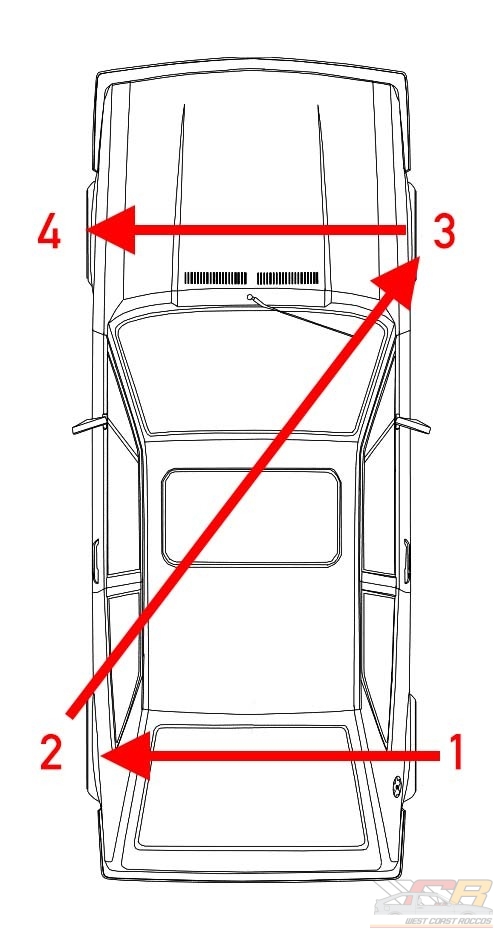
- Connect hose from bleeder bottle to calipers and bleed brakes in the following sequence:
- Right Rear caliper/wheel cylinder
- Left Rear caliper/wheel cylinder
- Right Front caliper
- Left Front caliper
Bleeding, Without Pressure Bleeder
- Connect hose from bleeder bottle to brake at each wheel using above sequence.
- Make sure connection on bleeder nippel are air tight. Loose connectors could allow air to syphon back into the hydraulic brake system.
- Make sure tube in drain bottle is submerged in old brake fluid. This will additionally help with bleeding incase the pedal is accidentally released before the bleed nipple is fully closed.
- Pump brake pedal several times and then hold pedal down.
- Pumping the brakes help push the air bubbles down the line and make brake bleeding much quicker.
DO NOT PRESS BRAKE PEDAL ALL THE WAY TO THE FLOOR.
THIS WILL DAMAGE YOUR MASTER CYLINDER & MAY
BLOW OUT THE INTERNAL SEALS!
- Pumping the brakes help push the air bubbles down the line and make brake bleeding much quicker.
- Open bleed screw and make note of the air bubbles in the fluid.
- Close bleed screw.
CAUTION: The brake fluid level in the reservoir must not fall below the MIN mark during bleeding.
- Make sure bleed screw is 100% closed – THEN – Release brake pedal.
- Repeat operation until brake fluid flows without air bubbles.
- Installing one way brake bleeder check valves is a good way to do this with only one person. However you still must pump up the brake pedal to push air down the line.